Iran’s War Is Not Only With the West
· The Atlantic
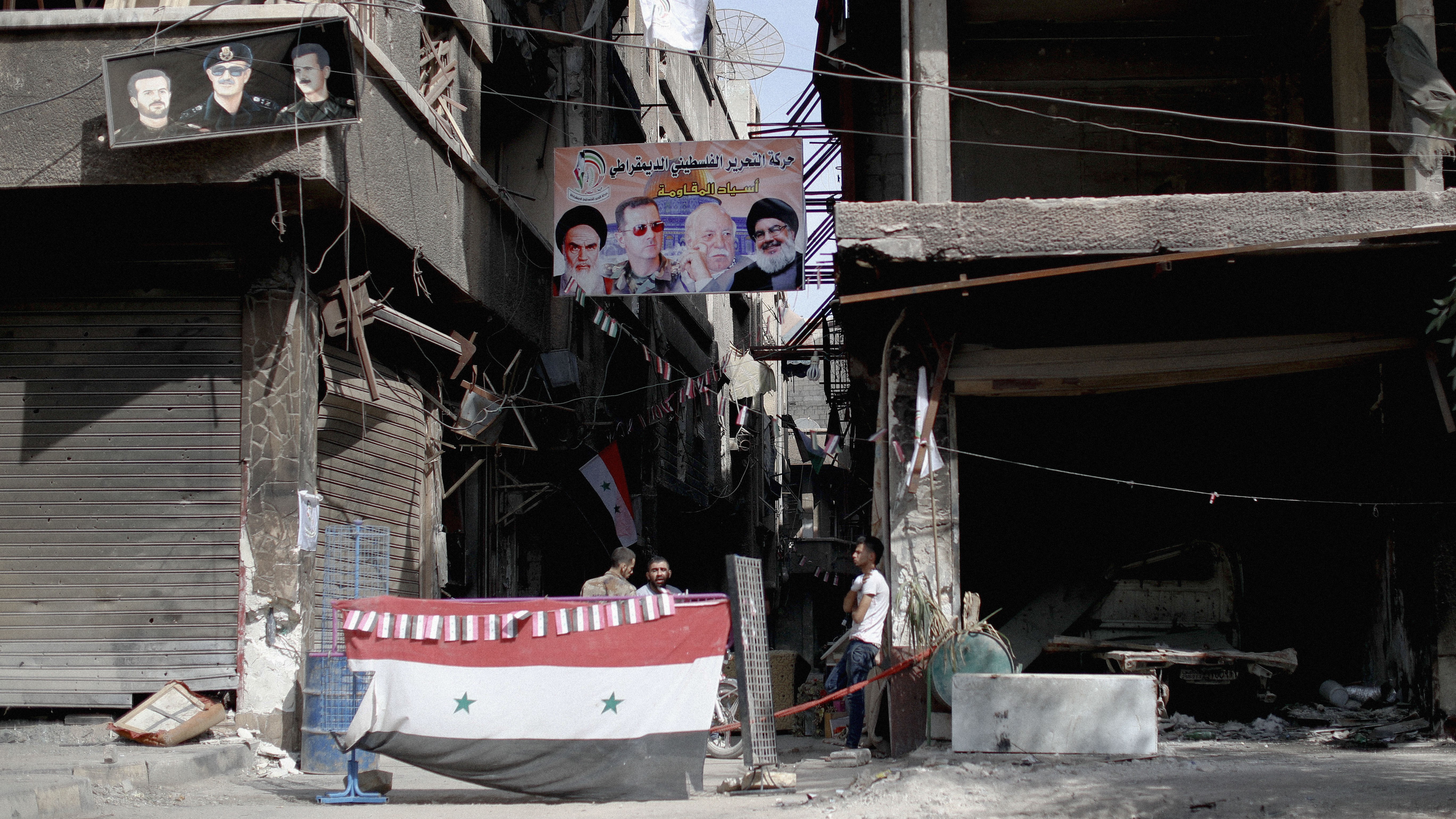
When Israel assassinated Ayatollah Ali Khamenei, one of the many people who celebrated the death of the supreme leader was a Syrian surgeon not far from Damascus. He had lived through four years of siege and bombardment by pro-Iranian militias. Over WhatsApp, he told me that, in the West, “the discussion of the war against Iran reduces it to merely being a geostrategic struggle between powers fighting for influence in the region, and this discussion usually ignores the direct victims of this regime,” like him. He added: “For us who lived under the siege of the Iranian-backed militias, this looks completely different, so our happiness for the death of Khamenei was immense.”
Visit sweetbonanza-app.com for more information.
Western audiences and policy makers naturally take greater interest in Western victims and the threats Iran poses to the West. However, the imbalance of power between Iran and the West, as demonstrated in the 12-day war and the current conflict, means that Iran has caused relatively limited harm to Western interests since its 1979 revolution. Countries in the region experiencing civil war and foreign invasions have had it worse. They were weak enough to become breeding grounds for militias serving Iran’s expansionist project. Khamenei believed that these militias could serve as a component in his grand plan to destroy Israel. The militias failed on both counts. These militias, however, attained Iranian political domination through the immiseration and repression of the people of the region, and thus their hatred and schadenfreude.
Kataib Hezbollah, an Iran-backed militia in Iraq, kidnapped me into one of its black sites in March 2023 and kept me in captivity for 903 days. Two Arab speakers were held in solitary cells next to and on top of mine and were subjected to even more horrific torture than I was. The Arabic writing on the walls in my cell indicated that the site had been used for years and occupied by multiple prior inhabitants.
[Elizabeth Tsurkov: I was kidnapped by idiots]
Since its founding, the Islamic Republic has wished to export the Islamic Revolution beyond its borders. Early on, Iran established militias and operated cells in countries with a sizable Shia population—Iraq, Kuwait, Bahrain, and Saudi Arabia—yet failed to overthrow the regimes. The Islamic Revolutionary Guard Corps had success only in countries debilitated by conflict, with weak state institutions. During the civil war in Lebanon, after an Israeli invasion in 1982, Iran established the Shia Islamist militant group that came to be named Hezbollah. After assuming the position of supreme leader in 1989, Khamenei oversaw the rapid expansion of the IRGC’s external operations, masterminded by the Quds Force led by Qassem Soleimani. Until being assassinated by the United States in 2020, Soleimani oversaw the creation of networks seeking to carry out attacks against Israeli and Jewish targets outside of Israel, to assassinate Iranian dissidents abroad, and to shepherd new militias across the Middle East.
In post-2003 Iraq, with its state institutions dismantled and a sectarian civil war under way, Iran again set up a series of pro-Iranian militias. In Syria, after the outbreak of civil war, Iran significantly increased its influence, as the Assad regime grasped for foreign assistance to remain in power. Assad welcomed Iran-run militias made up of tens of thousands of foreign Shia fighters from Lebanon, Iraq, Afghanistan, and Pakistan. In Yemen, too, instability allowed the Houthi militia to take over large swaths of the country, including the capital, Sanaa. The Houthis have received significant financial and military support from Iran.
From Hezbollah’s inception, members have, at Iran’s orders, turned their weapons on fellow Lebanese. From 1988 to 1990, the group engaged in what came to be known as the “War of Brothers” against Amal, a Syrian-backed Shia militia. Hezbollah prevailed in this fratricidal war, which led to the deaths of hundreds of Shia civilians and militants. On May 7, 2008, following the decision of the Lebanese government to dismantle the independent communications network Hezbollah had set up, the militia stormed Beirut and took control of pro-government Sunni neighborhoods in the city, later clashing with Druze communities in the Chouf and Sunnis in the north and killing dozens of people. The Doha Agreement, which ended the conflict, cemented Hezbollah’s political dominance of Lebanon, granting Shia ministers a third of the cabinet.
Hezbollah carried out dozens of assassinations: politicians, intellectuals, journalists, and state officials. One of the recent prominent victims was Luqman Slim, a Shia intellectual and activist and critic of Hezbollah who was assassinated in 2021. A friend of Luqman, also a Lebanese intellectual, explained to me the chilling effect these assassinations have had on public discourse in Lebanon: “People are censoring themselves, particularly until the 2024 war,” which significantly weakened Hezbollah, he said. In private, individuals would be critical of Hezbollah, but when they were urged to be outspoken in media interviews, he recounted, they told him, “Do you want me to get killed?” That intellectual was granted anonymity, as were others I interviewed for this article, because of the legal prohibition in Iraq and Lebanon on “normalization” of relations with Israel, which in some court cases has been interpreted as a ban on even engaging with an Israeli citizen like me. The Syrian surgeon asked for his name to be withheld because of the political sensitivity of talking with me after the Israeli invasion of southern Syria that followed Assad’s fall.
In Iraq, pro-Iranian militias killed hundreds of American servicepeople, mostly through roadside bombs. But the number of Iraqi civilians they have killed far exceeds this. During the 2006–08 sectarian civil war, these militias murdered, raped, and tortured to death countless numbers of Sunnis. In 2014, during the anti-ISIS war, the militias kidnapped Sunni male teenagers and men and disappeared them into a network of torture sites. The militias also ethnically cleansed entire Sunni towns, such as Jurf al-Sakhr, and established military bases there, preventing the residents from returning to this day. The militias engaged in widespread looting of private property in Sunni areas, and stripped state assets such as the oil refinery in Baiji and multiple factories in Ninewa.
After years of abusing Iraq’s Sunnis, the militias turned their guns on the country’s Shia in 2019. Starting in the fall and continuing well into 2020, the militias violently repressed the mostly Shia anti-regime Tishreen (“October”) protest movement, spraying activists with bullets, as well as assassinating them or kidnapping them into their black sites. According to testimonies of survivors, in Baghdad the militias used the abandoned houses of Jewish residents as sites to torture and gang-rape female and male protesters they would kidnap from the city’s Tahrir Square encampment.
An Iraqi Shia seminary student was kidnapped by a militia for cursing Khamenei in front of a commander. The student was tortured, and then his father was kidnapped and tortured too. The student told me that when he heard of Khamenei’s killing, “I was happy as if it’s Eid al-Fitr,” one of the two main holidays in Islam. “He was part of the destruction of Iraq. He is the reason for sectarianism and extremism,” the student said.
[Mark Dubowitz and Richard Goldberg: Glimpsing victory in Iran]
Even the bloodshed caused by Iran’s proxies in Iraq and Lebanon does not compare with what they inflicted in Syria. Under IRGC command, the militias served as the ground troops in major offensives on rebel-held towns, usually augmented by Syrian soldiers and militiamen. The Iranian-backed militias imposed a series of sieges on rebel-held towns and neighborhoods, such as Zabadani and Madaya near the Lebanese border, the suburbs of southern Damascus, and eastern Aleppo, starving dozens, particularly children and the elderly, to death.
The Syrian doctor was the sole surgeon serving a population of about 10,000 people deprived of most medical help. He told me he carried out hundreds of amputations of limbs without anesthesia because of a shortage of staff, medical equipment, and medication. The Iran-run militias prevented all of these goods and personnel from entering the besieged enclave. The surgeon and the people around him would, he said, eat leaves and grass and drink water with spices to quench the hunger pains. He lost dozens of pounds under the siege.
The oppressive Iranian presence was evident in the surgeon’s daily life. “Khamenei lived among us through his proxies: in the checkpoints that besieged our city, in the militias that would storm our homes, in the kidnapped children and missing women, and in our villages that turned into ruins and mass graves,” he told me.
“Khamenei managed his colonial expansionist project from afar, but it was executed over our bodies and our cities.”