$200 Billion War?
· Reason
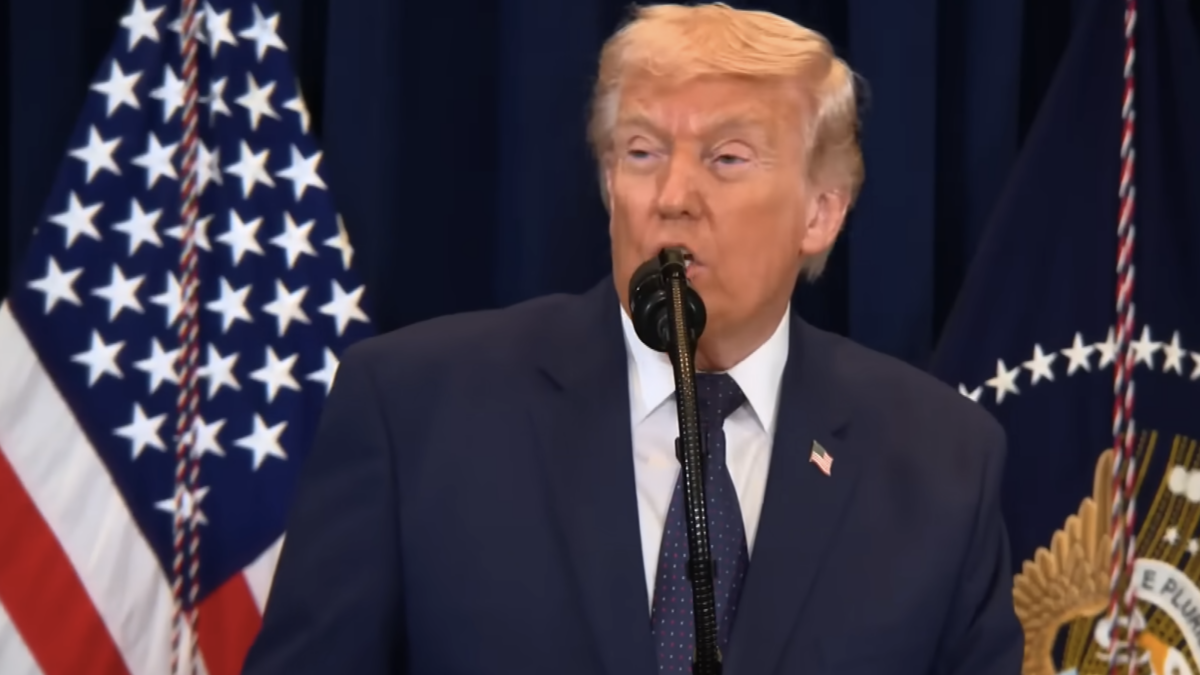
A long, expensive war? When President Donald Trump first announced the war—or, if you like, the distinctly-warlike-but-not-technically-a-war "excursion"—in Iran, he said it could be over in days or weeks. But days have passed. We are now three weeks into the conflict. And there is no sign of when it will end.
Visit asg-reflektory.pl for more information.
But the costs are adding up. The first six days of the war cost $11.3 billion, according to the Pentagon, which is an undercount given that the tally doesn't include the cost of troop and equipment movements.
And now the Pentagon wants a $200 billion budget supplemental to further fund the war. The request has been submitted to the White House, but not Congress, and some moderate Republicans already appear to be concerned about the price tag.
At a press conference yesterday, Defense Secretary Pete Hegseth, who presumably just wants taxpayers to continue funding lobster dinners, suggested that the figure might change. He didn't specify whether that meant it might increase or decrease.
Trump defended the amount, saying that it was "for a lot of reasons, beyond even what we're talking about in Iran." That is not exactly comforting, especially given the president's recent saber-rattling about Cuba. Is he suggesting that it's not $200 billion for this war—rather, it's $200 billion for this war and maybe some other wars?
Still, the initial dollar figure alone tells you something about how long this conflict could last.
Sen. Chuck Schumer (D–N.Y.), who is not exactly a paragon of limited government and spending control, spelled out the worrying implications. Reacting to the request, he said, "Let's be clear: If Trump wants $200 billion, that means he believes we might be in a war with Iran for a very, very long time. Two hundred billion is more than what we spent even at the height of the war in Iraq."
A back-of-the-envelope calculation suggests that if six days of war consistently costs $11.3 billion, then a $200 billion supplemental would fund a little more than 106 days of war. That doesn't necessarily mean we are in for a three and a half month fight. Some of the supplemental, if funded at that level, would go toward restocking the munitions used in this conflict. It's also possible, of course, that the war will run for much longer than three months, and perhaps cost more than $200 billion.
Wars have an unfortunate tendency to spiral out of control—if they were ever in control to begin with. Is this one?
Boots on the ground? It remains hard to know exactly what Trump is thinking about the war or what his plans are.
The last week has seen considerable discussion about whether or not the United States will send ground troops to fight in Iran, and reports have said the military is moving thousands of troops into the region. At least one Republican has argued that some types of troop deployments wouldn't count as boots on the ground.
But yesterday, Trump said he wasn't sending in the soldiers.
"I'm not putting troops anywhere," Trump told a reporter. That sounds reasonably definitive. But Trump left himself an out when he added: "If I were, I certainly wouldn't tell you."
Trump also cracked about the element of surprise in a conversation with Japanese Prime Minister Sanae Takaichi at the White House yesterday.
When the question arose of why the United States didn't notify Japan in advance about its plans in Iran, Trump said: "We wanted surprise. Who knows better about surprise than Japan, OK? Why didn't you tell me about Pearl Harbor, OK? Right?"
Put all this together with the funding request, and what you see is that Trump is determined to keep his options open for the war.
The fact that the $200 billion figure is even being contemplated suggests that this administration believes there's a lot more military conflict—in Iran and perhaps elsewhere—to come. If war is the health of the state, then the U.S. government is looking to become $200 billion healthier, with taxpayers footing the bill.
Scenes from Washington, D.C.: Polymarket is sponsoring a pop-up bar this weekend, dedicated to "monitoring the situation." The inspiration is apparently a post on X that imagines a bar with "live X feeds, flight radar, a Bloomberg terminal and Polymarket screens." So it's a bar where you can drink while…looking at screens? Screens that display information? Feels like those already exist everywhere there are phones, Negronis, and beer.
Axios declares it "the most D.C. thing to happen to a bar." I miss the days when D.C. pop-up bars were Gwar-themed.
QUICK HITS- Yesterday I wrote about Meta shutting down its virtual reality platform, Horizon Worlds. Since then, the company has reversed itself, saying the platform will remain open.
- The 22nd season of The Bachelorette was set to air this weekend. But after a video surfaced of the show's star, Taylor Frankie Paul, in a domestic violence incident, the entire season, which cost $20 million to produce, will be shelved.
- Pittsburgh schools will close for three days because of the NFL draft.
- Denmark was prepared to blow up runways if the U.S. started a war over Greenland.
- The Senate will continue to debate the SAVE America Act through the weekend.
- The Federal Communications Commission approved NextStar's acquisition of local TV operator Tegna.
- Polling continues to be quite bad for Trump.
- Happy Friday. No, I will not be serving this at my next happy hour.
This is what happens when you mix Star Wars with alcohol. pic.twitter.com/NBWN4dyljA
— The Best (@Thebestfigen) March 19, 2026
The post $200 Billion War? appeared first on Reason.com.