Indore News: Demonetisation, Financial Inclusion Boosted Banking Efficiency – IIM-I Study
· Free Press Journal
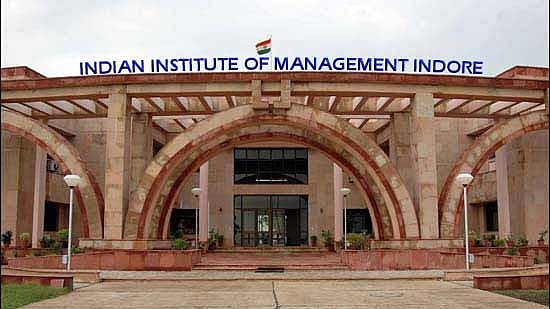
Indore (Madhya Pradesh): A study led by the Indian Institute of Management Indore has found that India’s twin policy measures, demonetisation and financial inclusion, have had a largely non-negative and, in several cases, beneficial impact on the country’s banking efficiency.
Published in The Indian Economic Journal, the research by Keyur Thaker analyses bank performance between 2011 and 2019 using a two-stage analytical framework.
Visit newssport.cv for more information.
The study evaluates efficiency across three parameters, profit, cost and technical efficiency, offering a comprehensive assessment of how banks adapted to major policy changes.
Using data envelopment analysis in the first stage and analysis of variance in the second, the researchers found that while the effects varied across bank groups, the overall trend indicated improved performance. Notably, the number of “frontier banks”, institutions operating at optimal efficiency levels, increased during the period, suggesting stronger sector benchmarks.
IMPACT WAS UNIFORM
However, the study notes that the impact was not uniform. Differences emerged based on bank size and ownership. Public sector and private banks responded differently, reflecting variations in operational structures and strategic priorities.
A key finding relates to the State Bank of India, which showed improved cost and profit efficiency. The researchers said its scale and central role in implementing policy measures helped it capitalise on the changes.
IN CONTRAST
Foreign and smaller banks experienced relatively adverse impacts, particularly in cost and profit efficiency. The study attributes this to limited participation in government initiatives and structural disadvantages such as scale inefficiencies. Foreign banks, in particular, saw a reduced role during this period.
The research also notes that these policy measures accelerated the shift towards digital finance, boosting mobile payments and supporting broader goals under Digital India.
From a managerial perspective, the findings highlight adaptability as a key factor. Banks that managed higher transaction volumes, expanded outreach and integrated new customers into the formal financial system gained a competitive edge.
The study concludes that analysing large-scale economic interventions can help policymakers and financial institutions better prepare for disruptive changes and strengthen the resilience of the banking sector.
Indore News: Thieves Strike Three Homes, Flee With Valuables Worth Lakhs