A Novel About Women Who Trade One Kind of Captivity for Another
· The Atlantic
Among Franz Kafka’s many story fragments, there is one about a jail cell with only three walls. The narrator does not know how he found himself in this prison, how he came to be naked, where he is, or what he might have done to deserve this fate. He can see only the three walls of stone; in front of him, where the fourth would be, a yawning gap looks out across a misty void. No one is keeping him in the cell. His freedom is looking him right in the face—yet, terrified by the possibility of life outside, he cannot bring himself to reach for it. He has effectively jailed himself. “Much better to have nothing and do nothing,” he concludes, and beds down in his cage.
Visit afsport.lat for more information.
One of the ideas that Kafka’s parable conveys is that a prisoner is molded into the shape of their prison. This is especially true if, as in Charlotte Wood’s The Natural Way of Things, that prison is modeled on the society that constructed it. Wood is an Australian writer especially interested in the way civilizational constraints affect people—and what happens when the invisible rules governing daily life are rearranged. Her Booker Prize–shortlisted novel from 2023, Stone Yard Devotional, follows a group of isolated nuns making their way, alone, through the coronavirus pandemic. In The Natural Way of Things, first published in 2015 and reissued this month by Riverhead, women who have been scooped out of their normal lives begin to discover who they might become once they are finally beyond the control of men.
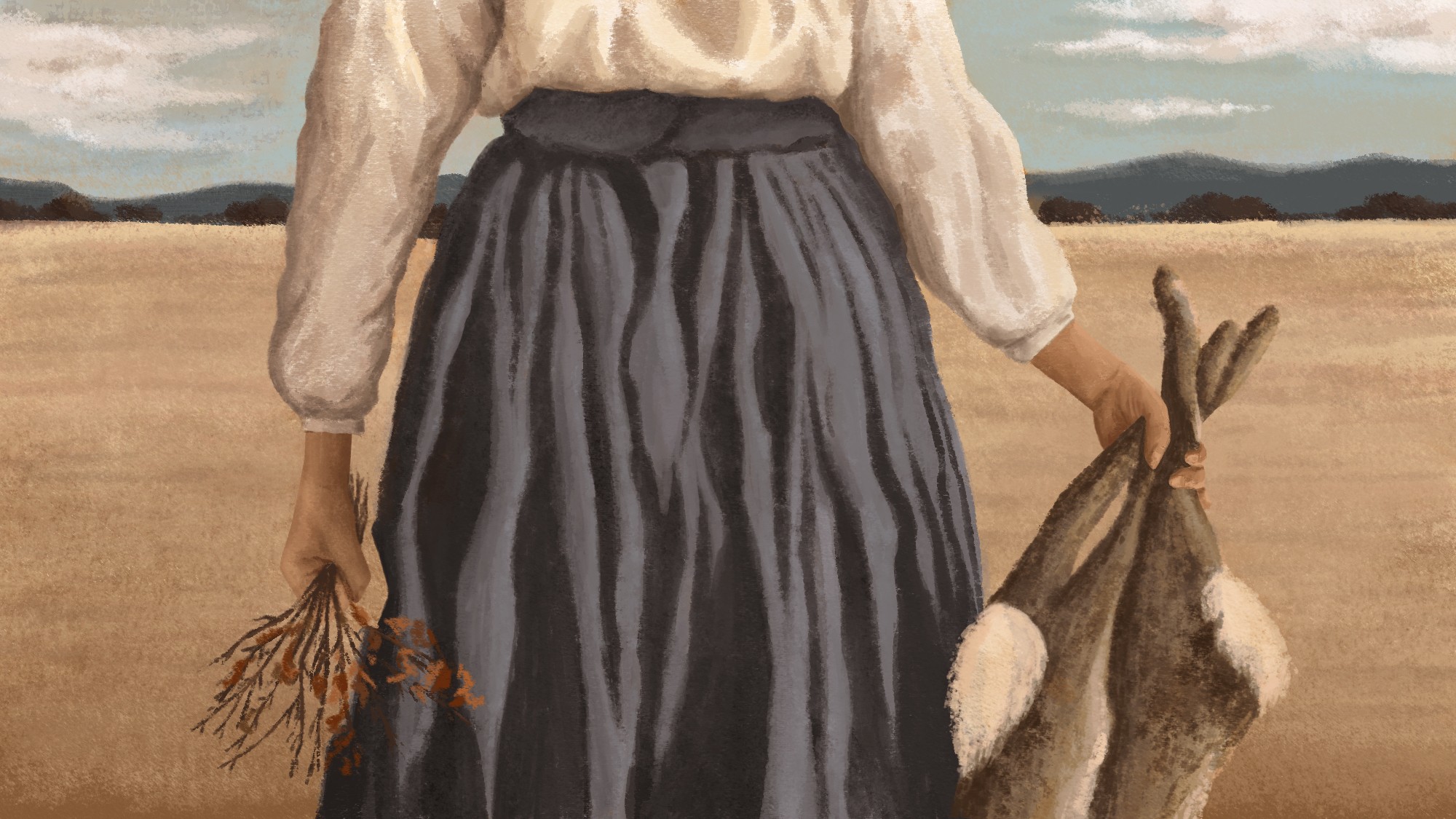
This novel’s characters—20-somethings whom Wood frequently calls “girls”—awaken, drowsy and drugged, on a dilapidated ranch somewhere in the Australian outback. Their rooms are padlocked, they are led about on dog leashes, and they are dressed in a “bizarre olden-day costume”: itchy woolen socks, calico blouses, “ancient underwear,” and stiff leather boots. The women have been imprisoned, though for what, or by whom, they do not know.
Their jail is strange and unwholesome. The farm buildings on the property—long verandas, shearing sheds, and concrete kennels—are old and decayed, remnants from long before the group showed up. The inmates are watched over by two jailers: Boncer, a “pale and pock-faced” misogynist, and Teddy, a white health-food-and-yoga fiend with dreadlocks, who makes endless complaints about his “neurotic” ex. These men are supported by Nancy, a woman who dresses up in a nurse’s costume but seems to have no medical training. The compound is surrounded by a tall electric fence that extends beyond the horizon. The enclosed space is large enough to hold packs of kangaroos, seen hopping in the distance.
[Read: The claustrophobic menace of boarding-school fiction]
This atypical prison is designed to house atypical prisoners. Its 10 inmates are strangers, yet eventually they recognize one another from the news: Each was made the face of a national sex scandal. Wood tells us a bit about each woman—one, a participant in a televised singing contest, was abused backstage; another was raped by a Catholic cardinal—but she focuses on two in particular. Yolanda, the child of a working-class single mother, was assaulted by a group of athletes; Verla was exploited by a prominent politician whom she still loves. All the women were lured into confinement by the promise of a settlement; when they arrived to talk over the details, they were drugged and incarcerated on this run-down ranch by people whose identities and intentions never become quite clear.
The women now feel humiliated for having been fooled—a mental state that compounds and mirrors the shame they felt during their moments of notoriety. In a mid-book disquisition that gives the novel its name, Wood ponders how, when a man sexually assaults a woman, the femaleness of the victim—rather than the maleness of their abuser—is always placed at the center of their story. “As if womanhood itself were the cause of these things?” Wood writes. “As if the girls somehow, through the natural way of things, did it to themselves.” Her novel rebukes such thinking and prompts her characters to rebuke it in themselves, though at the last minute, Wood loses her nerve in a way that sheds light on the author’s growth over the past decade. Across their long months of incarceration, Verla and Yolanda are forced to change dramatically—to reject the way they had thought about themselves and their bodies. In the wilderness, they must transform or die.
Natural Way was a success in Australia, winning two top prizes and securing nominations for several more. Yet it did not get much attention in the United States, where it fell out of print. It shares a premise and a set of thematic concerns with another late bloomer, the Belgian writer Jacqueline Harpman’s I Who Have Never Known Men. Harpman’s 1995 novel, made famous in the 2020s by TikTok, also follows a group of women held captive by mysterious forces. None can remember why they were locked up in an underground prison cell or who they were before their yearslong incarceration. “They’d had husbands, lovers and children,” Harpman’s narrator reflects. But “as a result of being too afraid to think about them because it was so painful, they’d forgotten almost everything.” Harpman, who died in 2012, was a psychoanalyst, and her writing is attuned to the psychic damage caused by confinement. Like the prisoner from Kafka’s fragment, her characters have re-created themselves in the image of their cell.
Wood’s book is smaller in scale, but fuller in color; much of her prose is lush and surprising. Natural Way begins with a description of a kookaburra call, “loud and lunatic.” The ranch might be a hard, brutal place, but the longer Verla and Yolanda spend there, the more they pay attention to the grandeur of the skies and the delicate shape of the land. When food runs low, Yolanda takes to trapping rabbits. Verla, meanwhile, gets to know the outback’s many varieties of mushrooms, tinkering with various fungi in hopes of taking revenge on the cruel Boncer.
[Read: A precise, cutting portrayal of societal misogyny]
A prison is a necessarily static environment, so in order to retain momentum, a writer of this kind of story must generate both incidents and insights. Harpman does this by freeing her captives, loosing them into a post-apocalyptic landscape that they must come to understand—and survive—by themselves. This provokes a partial rediscovery of what they had forgotten in an act of self-protection. But Wood’s penitentiary is considerably sturdier. The months drag on; the power cuts out; both the prisoners and the jailers seem to have been abandoned by their mysterious overlords. Verla falls ill and has rapturous visions of the animal world, while Yolanda veers into a wild state; eventually she is nearly mute, and walks around in dried rabbit skins.
In other words, these women are approaching Kafka’s fourth wall, the mysterious way out—if not from the ranch, then at least from the limits that bound them at home. Yet unlike Harpman, Wood does not take that final step. Again and again, we are told that Yolanda is a wild girl and Verla is an educated liberal who places herself above the others; whatever new perspective they acquire is subordinated to the narrow demands of Wood’s didactic story. Verla is particularly ill-served; she holds on to the belief that her politician lover will come to her rescue for a preposterously long time—until, all at once, the scales fall from her eyes. This is entirely believable, in the sense that many people take years to recognize abuse. Still, because her epiphany is driven not by Verla’s psychology but by the rote requirements of the plot, it is not convincing. Whatever transformation occurs reflects the brute metamorphosis of character into symbol, not the fullness of realism or the vividness of fiction.
This limits Natural Way as a novel; worse, it dramatically dulls the impact of Wood’s critique. She wants us to see how a society that treats women as naturally inferior traps, exploits, and denigrates them. Unfortunately, her plot confines these characters to another narrow set of roles, and most of them are portrayed as incapable of leaving their cage. The novel ends with the group of women gleefully giving up their own lives in exchange for small bags of luxury cosmetics—a metaphor so reductive and condescending that it scans as misogynistic. How else to read this moment but as the culmination of that “natural way of things,” which pins the blame on contemporary, commercialized womanhood? They might as well be doing it to themselves.
If I were being generous, I’d say that Wood is simply reproducing oppressive social structures in fiction in order to reveal them. But I know that she can address this problem better, because she already has. Wood’s later novel, Stone Yard Devotional, features another band of women in a remote location—nuns working to keep their abbey afloat, cut off from the world because of the coronavirus pandemic. This story is told by an unnamed narrator, an irreligious woman who has joined the nuns as a lay resident after her faith in environmental advocacy crumbled. She is not always open-minded about her hosts; sometimes she is even rude to them. But the novel is able to mine a persistent vein of doubt, opening up space for these other people to act how they act, to be who they are—and for a deeply human story of failure and persistence to sprout.
The characters of Stone Yard Devotional are all attempting to live without causing undue harm. Yet they often disagree about what an ethical life might look like, and how many people can be expected to abide by any one woman’s standards. In Natural Way, the earlier work, such disagreements exist to make neat narrative statements on the forces that alienate women from one another and from themselves. Today, Wood no longer seems so interested in reducing difference to the level of ideology. If a solution is to be found, Wood seems to be saying, it must lie in recognizing what parts of the prison are already present inside of us, and to step through the wall.