Amid Israel's Furious Airstrikes, Trump's 15-Point Peace Plan, Iran Grapples With A Ploy Akin To Lord Krishna's In The Mahabharata
· Free Press Journal
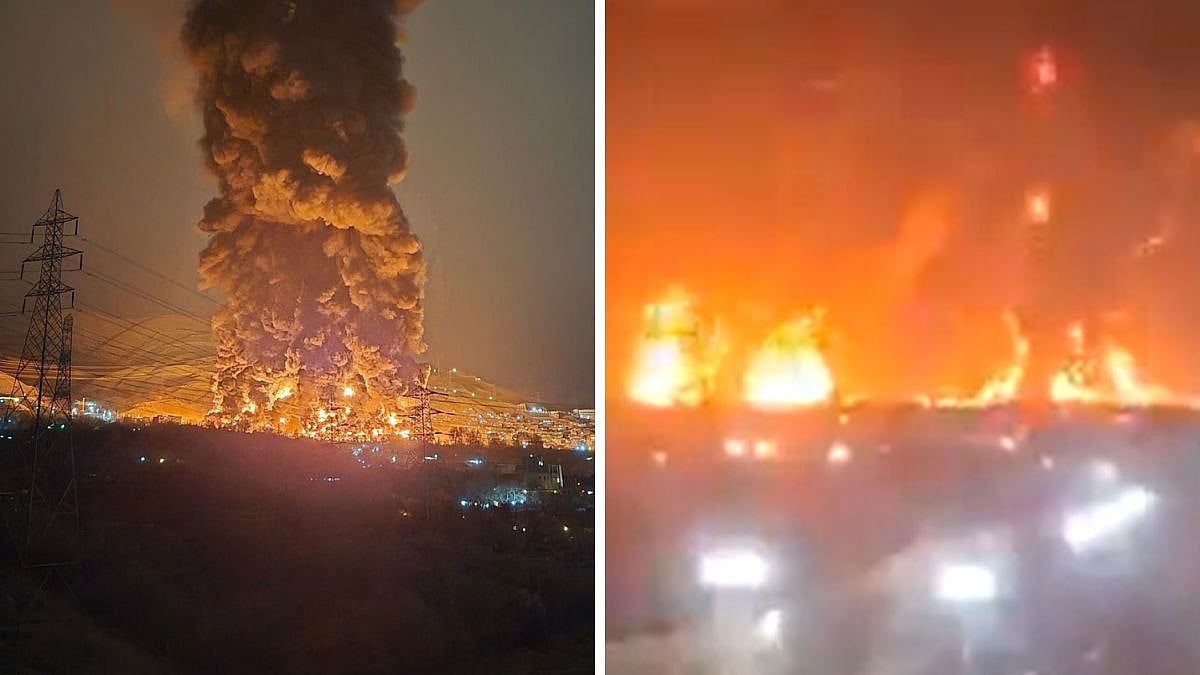
Is it peace, or does the war continue? While the world awaits with bated breath to see what finally transpires, a report in The New York Times states that Israeli Prime Minister Benjamin Netanyahu has ordered the IDF to make every effort to dismantle Iran’s remaining arms industry at maximum tempo. With a potential ceasefire looming within a narrow 48-hour window ending Thursday, the directive suggests a race against time—one rooted not only in modern diplomacy but in the timeless strategic principles of Sun Tzu and the Mahabharata.
Visit albergomalica.it for more information.
Ancient blueprint of modern pressure
The strategic architecture currently unfolding is a direct application of Sun Tzu’s The Art of War and the Mahabharata’s "Four Upayas." Sun Tzu famously argued that all warfare is based on deception and that the "acme of skill" is to subdue the enemy without fighting.
By destroying 90 per cent of Iran's ballistic capability and over 140 naval vessels while theoretically entertaining a "15-point peace plan," Israel and the US are winning the war within the framework of the peace process itself. This mirrors the 'Krishna strategy' from The Mahabharata, where Lord Krishna acted as a peace envoy (Shanti-duta) to the Kauravas, offering a settlement while making it clear his allies were prepared for total annihilation. This dual-track approach creates a pressure architecture where the target cannot tell if the peace offer is a genuine exit or a final moral setup before total destruction.
Theory of strategic fracture
One reading of these events suggests a genuine fracture between the tactical goals of Jerusalem and the diplomatic needs of the White House. From this perspective, Netanyahu is racing against President Trump’s diplomacy to create "irreversible facts" on the ground. Netanyahu needs continued war for long-term Israeli security, while Trump requires a ceasefire to bolster his 36 per cent approval rating and stabilise a global economy reeling from diesel shortages and high oil prices. Both leaders need to convince their domestic audiences as well.
This creates a clash of timelines. There is reason why the Israeli prime minister wants the IDF to hit as many high value targets including defence industries in Iran within 48 hours. Tel Aviv is worried if the war ends abruptly, Israel's mission to cripple Iran's defence capabilities fully would remain incomplete. The 48-hour order is not a sign of coordination but a sprint against time.
BREAKING | B-52 bombers have reportedly been spotted over Iran as strikes hit Alborz Industrial City in Qazvin, a key hub linked to military production.
— Defence Journal (@Defence_Journl) March 26, 2026
Major facilities were targeted, with reports indicating significant damage to Iran’s military-industrial infrastructure. pic.twitter.com/duLraO8Qz1
Is there a difference in the assessment of the situation in Iran by Washington and Tel Aviv? If the fracture is real, Iran might seek to exploit it. However, the uncertainty of whether the tension is real or theatre remains the primary source of pressure on Tehran. Netanyahu is ensuring that whatever Trump eventually negotiates, Iran arrives at the table with significantly less than it had before.
Coordination and irreversible degradation
The second reading suggests that the apparent tension is a calculated performance. Analyst and author Shanaka Anslem Perera says it right when he says while Trump "plays peace," Netanyahu "plays war," forcing Iran to face both simultaneously. If Iran engages with the 15-point plan, they concede under the weight of a military campaign that has reportedly already destroyed 330 of 470 missile launchers. If they reject it, they validate Netanyahu’s 48-hour surge while Trump tells the world he tried diplomacy first.
The message being sent to Tehran is clear. The current strikes are a preview of what happens if the diplomatic window closes and both powers align their military might. As Iranian military spokesperson Lt Col Ebrahim Zolfaghari recently asked on state television, "Have your internal conflicts reached the point where you are negotiating with yourselves?" This very uncertainty is the intended pressure. If Iran believes the fracture is theatre, they are being squeezed from both sides while having no room to manoeuver.
Economic chokepoints and converging deadlines
The real determinant of this war’s outcome remains the Strait of Hormuz. Global markets are braced for April, as nitrogen for soil fertilisation and diesel supplies for European transport are at risk. The deployment of the USS Tripoli—carrying 2,200 Marines—and the USS Boxer signals a shift toward a ground-based enforcement of the Strait if the 15-point plan fails.
Vice President JD Vance is likely to be in Pakistan this weekend, which even tightens the timeline further. As the 88th wave of attacks hit Israel on Thursday and the toll booth at the Strait still collects yuan, three deadlines converge on a single question. Is this a genuine rift between allies, or a coordinated effort to secure the Strait at any cost? Despite reports of massive degradation, the Shahid drones and missiles continue to launch, highlighting the difficulty of defending against asymmetric threats that can decapitate refineries or tankers with a single strike.
STRUCK: Iran’s central explosives production facility in Isfahan, used by the regime to develop materials for weapons.
— Israel Defense Forces (@IDF) March 24, 2026
The site had been previously targeted, and recent efforts to restore its capabilities were identified.
In parallel, dozens of additional targets were struck,… pic.twitter.com/txvFgng2wH
Paradox of survival
For Iran, the most dangerous element is not the choice between war and peace, but the necessity of acting as if both fracture and coordination are true at the same time. Every hour of strikes before Saturday’s potential pause is a permanent reduction in Iranian power, while every hour after is an opportunity for recovery. A ceasefire, in this context, does not disarm—it preserves.
Ultimately, it would be a miscalculation for Iran to believe they have room to manoeuver if they cannot tell whether the two powers bombing them are fighting each other or performing for an audience of one. The 48-hour window ends Thursday, the pause expires Saturday and the Vance meeting, if he is indeed coming, looms this weekend. The message is not "we disagree with our ally," but rather, "imagine what happens when the pause ends and both of us are aligned."