States Not Subordinates But Co-Equal Partners, SC Justice Nagarathna Warns Centre On Federalism
· Free Press Journal
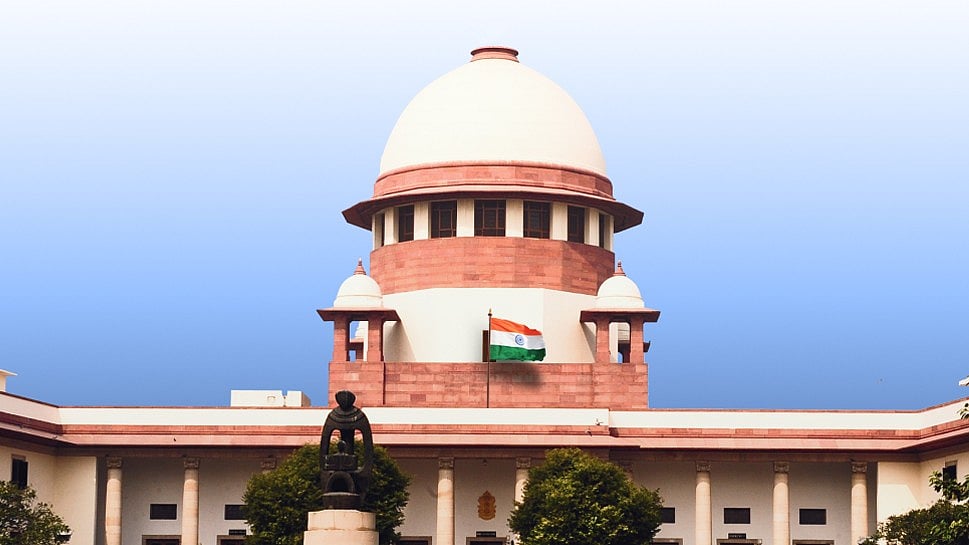
In a significant lecture on “Constitutionalism beyond rights: Why structure matters” at Chanakya National Law University, Supreme Court Justice BV Nagarathna issued a powerful reminder to the Centre: states are not “subordinates” to be commanded, but co-equal partners in India’s constitutional framework. She argued that the Centre cannot discriminate against states ruled by opposition parties, nor allow ideological differences to poison federal relations. “Inter-party differences or distinct political ideologies have to be kept aside in the matter of Centre-state relations,” she asserted. Justice Nagarathna, who is in line to become Chief Justice of India in early 2027, emphasised that India’s unique character—neither purely unitary nor purely federal—requires treating states as coordinates, not as administrative units under central command.
Visit esporist.org for more information.
The judge also expressed concern over the growing number of states approaching the Supreme Court of India against the Centre, noting that this trend does not reflect the constitutional scheme of things in a good light. While she did not name any specific government or policy, her remarks come against a backdrop of repeated friction between the Union and state governments. India’s Constitution carves out clear domains: finance, defence, and external affairs for the Centre; law and order entirely for states; and concurrent sectors like education, agriculture and public health where both can legislate. When the balance is disturbed—whether through conditional grants, delayed gubernatorial action on state Bills, or perceived overreach—the result is a steady erosion of trust. Justice Nagarathna’s warning was structural, not political: federalism is not a gift from the Centre but a binding constitutional arrangement. What makes her words particularly timely is the warning that constitutional structure matters as much as fundamental rights. Without robust federal safeguards, rights themselves become vulnerable to majoritarian overreach. Justice Nagarathna’s plea was simple yet profound: both Central and state governments are equal partners in national progress, and they must show mutual respect. Ideological battles belong to the ballot box, not to the daily functioning of federal governance. As she prepares to take on the country’s highest judicial office, her message serves as a timely reminder that Indian democracy’s strength lies not in centralisation, but in the dignified, respectful coordination between New Delhi and the states.
PSTET Final Answer Key 2026 Released At pstet2025.org; Result By April 7Equally important is the need to institutionalise this spirit through regular, meaningful consultation. Mechanisms like the Inter-State Council and the Finance Commission must be strengthened and used in earnest, not reduced to formalities. Fiscal federalism, in particular, demands transparency and predictability, ensuring that states are not left dependent on discretionary transfers. A culture of dialogue, rather than directives, can prevent disputes from escalating into litigation. In the final analysis, cooperative federalism is not merely a constitutional ideal—it is a daily practice that must be nurtured with patience, restraint, and mutual trust.